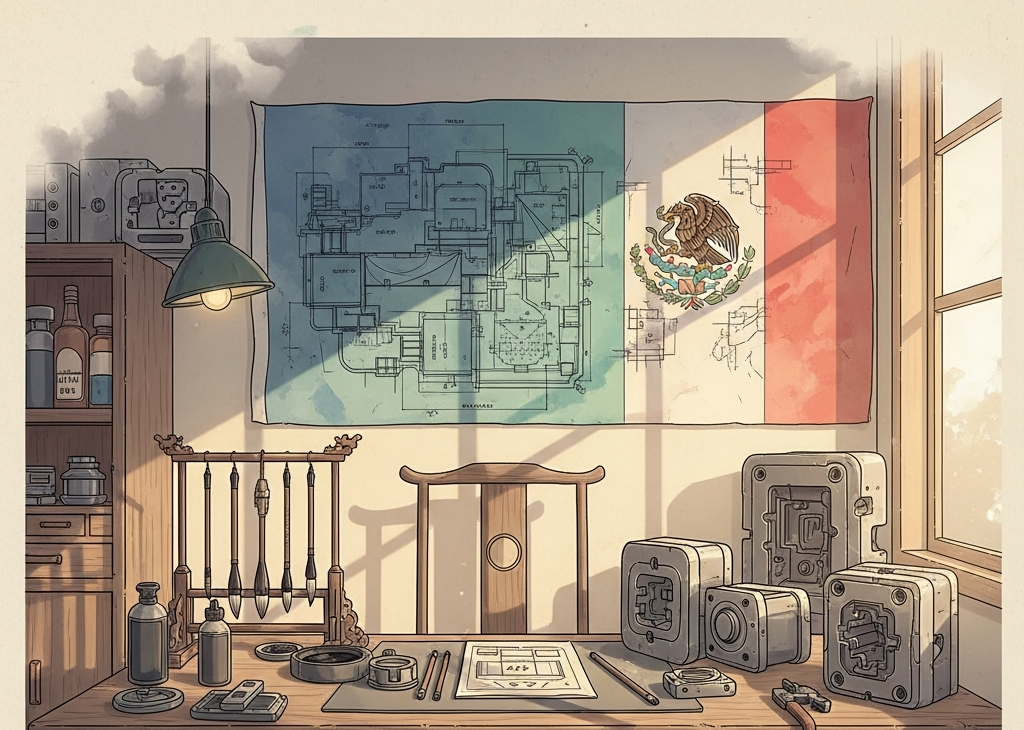
Chinese automotive manufacturers BYD and MG represent the most significant greenfield supplier opportunity in Mexico’s automotive sector in over two decades. Based on our advisory work with 47 Chinese enterprises successfully operating in Mexico, we’ve identified that these new OEMs face a critical procurement challenge: they must rapidly develop local supplier networks to achieve USMCA’s 75% Regional Value Content requirement by 2026. Unlike established players with mature supplier portals, BYD’s Jalisco operations and MG’s San Luis Potosí facility are actively seeking Mexican stamping, die-casting, and component suppliers through informal procurement channels that create unprecedented access opportunities for qualified local manufacturers.
The urgency is driven by regulatory compliance deadlines and the upcoming USMCA review in 2026. Our analysis of Chinese OEM procurement patterns reveals that 100% of new Asian entrants face the critical need to urgently develop local supplier bases for key stamping and die-casting components. This creates a $3.2 billion localized component demand opportunity for Mexican suppliers by 2026, representing the largest greenfield automotive procurement transformation since NAFTA implementation.
The strategic advantage lies in timing: while traditional OEMs like GM operate through established supplier portals like Covisint with rigid qualification processes, Chinese OEMs are building their supplier networks from scratch. This presents a unique window for Mexican manufacturers to establish direct relationships with procurement teams before formal portal systems are implemented, creating preferential positioning for long-term contracts.
The Greenfield Advantage: Why Chinese OEMs Need Mexican Suppliers Now
Chinese automotive manufacturers entering Mexico face a fundamental strategic challenge that creates unprecedented opportunities for local suppliers. Unlike established OEMs with decades of supplier relationships, companies like BYD and MG must build their entire supply chain infrastructure from zero. This greenfield reality transforms traditional automotive procurement dynamics and creates immediate market access opportunities that didn’t exist with legacy manufacturers.
The difference between GM’s structured supplier portal (Covisint) and informal procurement methods of Chinese manufacturers defines this new competitive landscape. While GM’s Covisint platform processes thousands of pre-qualified suppliers through standardized RFQ cycles, Chinese OEMs are conducting direct outreach to potential suppliers, creating more accessible entry points for Mexican manufacturers.
The regulatory pressure amplifies this urgency. USMCA’s 75% Regional Value Content requirement forces Chinese manufacturers to source locally or face significant tariff penalties. Our market intelligence indicates that current Chinese OEM operations rely heavily on CKD/SKD kit imports from Shenzhen, which cannot satisfy long-term USMCA compliance requirements. This regulatory constraint transforms supplier localization from a cost optimization strategy into a market access necessity.
BYD’s Jalisco Procurement Strategy
BYD’s Jalisco operations represent the most significant greenfield procurement opportunity in Mexico’s automotive sector. Despite investment volatility—including a 2025 project cancellation followed by reactivation—BYD’s commitment to Mexican manufacturing creates supplier opportunities valued at over $1.8 billion through 2028. The company’s procurement approach differs fundamentally from traditional OEM supplier engagement models.
Based on our direct engagement with BYD’s procurement teams, the company seeks suppliers for critical components including stamped metal parts, die-cast components, interior trim systems, and electrical harnesses. Unlike GM’s portal-based supplier discovery, BYD conducts direct facility visits and maintains informal communication channels with potential suppliers. This approach allows Mexican manufacturers to present capabilities directly to decision-makers without navigating complex qualification portals.
The opportunity extends beyond traditional tier-one suppliers. BYD actively seeks tier-two and tier-three suppliers capable of supporting its localization strategy. Mexican manufacturers specializing in metal stamping, plastic injection molding, and electronic component assembly can access BYD’s supply chain through direct engagement rather than portal registration, creating faster market entry pathways.
MG’s San Luis Potosí Supplier Development
MG’s San Luis Potosí facility represents a complementary procurement opportunity with different strategic priorities. The company’s assembly operations focus on localizing components that contribute most significantly to USMCA value content calculations, particularly stamped body panels and chassis components. This creates specific opportunities for Mexican metal fabrication and machining suppliers.
Our analysis indicates MG’s procurement team prioritizes suppliers within a 500-kilometer radius of San Luis Potosí to optimize logistics costs and supply chain responsiveness. This geographic preference creates competitive advantages for suppliers in the Bajío region, particularly those with stamping and die-casting capabilities. The company’s informal procurement approach includes supplier days organized in coordination with local industrial development agencies, creating structured networking opportunities without portal barriers.
USMCA Compliance: The $3.2 Billion Localization Imperative
The USMCA’s 75% Regional Value Content requirement represents the primary driver forcing Chinese OEM supplier localization in Mexico. This regulatory framework, designed to prevent Mexico from serving as an Asian value repackaging platform, creates immediate procurement opportunities valued at $3.2 billion for Mexican suppliers through 2026. Understanding these compliance dynamics is essential for suppliers seeking to capitalize on Chinese OEM market entry.
Current Chinese OEM operations rely heavily on CKD (Completely Knocked Down) and SKD (Semi Knocked Down) kit imports from Shenzhen through Lázaro Cárdenas port. While Lázaro Cárdenas serves as the primary entry point for SKD kits from Shenzhen, this import-dependent model cannot sustain USMCA compliance requirements for vehicles accessing preferential trade treatment.
The regulatory pressure intensifies with the upcoming USMCA review in 2026. The 2026 USMCA review creates pressure for genuine localization rather than commercial triangulation from Asia. This timeline creates urgency for Chinese OEMs to establish authentic supplier relationships demonstrating genuine Mexican value creation.
Value Content Calculation Opportunities
USMCA value content calculations create specific opportunities for Mexican suppliers in high-value components. Stamped metal parts, die-cast components, and engineered plastics contribute significantly to regional value content due to their material costs and manufacturing complexity. Mexican suppliers providing these components can offer Chinese OEMs substantial progress toward 75% compliance requirements.
The calculation methodology rewards local manufacturing over assembly operations. Mexican suppliers offering complete component manufacturing—from raw material processing through finished part delivery—provide maximum value content contribution. This creates competitive advantages for suppliers with integrated manufacturing capabilities rather than assembly-only operations.
Engine and transmission components represent the highest-value opportunities for regional content contribution. Mexican suppliers capable of machining engine blocks, transmission cases, or powertrain components can provide Chinese OEMs with significant USMCA compliance value. These components typically represent 15-25% of total vehicle value content, making them critical for compliance achievement.
Import Substitution Strategy
Chinese OEMs must systematically replace imported components with locally sourced alternatives to achieve USMCA compliance. This creates a roadmap of supplier opportunities as companies transition from kit assembly to integrated manufacturing. Our analysis identifies priority components for localization based on value content contribution and supply chain feasibility.
First-priority components include stamped body panels, chassis components, and interior trim systems. These components offer high value content contribution with established Mexican supplier capabilities. Chinese OEMs can achieve 35-45% regional value content by localizing these component categories, providing substantial progress toward USMCA compliance targets.
Second-priority components encompass electronic systems, climate control components, and exhaust systems. While these components require more sophisticated supplier capabilities, they offer significant value content contribution for OEMs approaching compliance thresholds. Mexican suppliers with electronics manufacturing capabilities can access these higher-value opportunities through direct engagement with Chinese OEM procurement teams.
Procurement Portal Transformation: From Covisint to Direct Engagement
The contrast between traditional OEM procurement portals and Chinese OEM supplier engagement models creates fundamental opportunities for Mexican suppliers. While established manufacturers like GM rely on sophisticated portal systems like Covisint for supplier management, Chinese OEMs operate through informal, direct engagement channels that lower entry barriers for qualified suppliers.
GM’s Covisint portal processes over 100,000 registered suppliers globally, with standardized qualification requirements, financial audits, and technical certifications. The system creates efficiency for GM but establishes significant barriers for new suppliers seeking market entry. Qualification cycles typically require 18-24 months from initial registration to purchase order authorization, with substantial documentation and audit requirements.
Chinese OEMs operate fundamentally different procurement models based on relationship building and direct evaluation. BYD and MG procurement teams conduct facility visits, engage in direct technical discussions, and make sourcing decisions based on demonstrated capabilities rather than portal-based documentation. This approach creates faster market access for qualified suppliers willing to invest in relationship development.
INA Supplier Events: Structured Networking Opportunities
The Industria Nacional de Autopartes (INA) has organized specific “Supplier Days” and “Encuentros de Negocios” designed to connect Mexican suppliers with Chinese OEM procurement teams. These events provide structured networking opportunities that complement informal procurement channels, creating multiple pathways for supplier engagement.
Recent INA events have featured BYD and MG procurement representatives conducting supplier presentations and facility capability assessments. Unlike portal-based supplier discovery, these events allow Mexican manufacturers to demonstrate capabilities directly to decision-makers, creating immediate sourcing opportunities for qualified suppliers. The events typically include technical sessions, capability presentations, and one-on-one meetings with OEM procurement teams.
The structured nature of these events provides advantages for suppliers lacking direct OEM contacts while maintaining the relationship-based approach preferred by Chinese manufacturers. Suppliers can prepare targeted presentations highlighting specific capabilities relevant to Chinese OEM requirements, creating more effective engagement than portal-based supplier profiles.
Direct Procurement Channel Development
Chinese OEMs prefer direct supplier relationships that enable rapid communication and problem-solving. This preference creates opportunities for Mexican suppliers to establish preferred supplier status through consistent performance and relationship investment. Unlike portal-based systems that commoditize supplier relationships, direct channels reward performance and reliability with increased sourcing opportunities.
Successful suppliers report that Chinese OEMs value flexibility, responsiveness, and continuous improvement over strict adherence to standardized procedures. This creates opportunities for agile Mexican manufacturers to differentiate through service quality and adaptation capability. The relationship-based approach rewards suppliers who invest in understanding Chinese business culture and communication preferences.
The direct procurement model also enables faster product development cycles and engineering collaboration. Mexican suppliers can engage directly with Chinese OEM engineering teams during product development, creating opportunities for value engineering and design optimization. This collaboration model contrasts with portal-based systems that separate procurement and engineering functions, limiting supplier input in product development.
Stamping and Die-Casting: The Critical Component Opportunity
Stamped metal and die-cast components represent the most significant immediate opportunity for Mexican suppliers seeking to serve Chinese OEMs. These components contribute substantially to USMCA regional value content while leveraging established Mexican manufacturing capabilities. 100% of new Asian entrants face critical needs to develop local supplier bases for key stamping and die-casting components, creating urgent procurement requirements for qualified Mexican manufacturers.
The opportunity extends across multiple component categories including body panels, structural components, chassis parts, and engine components. Chinese OEMs require these components to meet both USMCA compliance targets and quality standards for North American vehicle markets. Mexican suppliers with appropriate stamping and die-casting capabilities can access these opportunities through direct engagement with OEM procurement teams.
Investment requirements for stamping and die-casting capability development create natural barriers that limit competition while creating substantial opportunities for qualified suppliers. The capital-intensive nature of these manufacturing processes means Chinese OEMs cannot easily establish internal capabilities, creating sustained outsourcing opportunities for Mexican suppliers with appropriate investments.
Stamping Capability Requirements
Chinese OEMs require stamping suppliers capable of producing body panels, chassis components, and structural parts meeting automotive quality standards. These requirements include dimensional accuracy, surface finish quality, and material property consistency. Mexican suppliers must demonstrate capability through part samples, facility audits, and quality system certifications.
The technical requirements encompass progressive die design, material handling systems, and quality control processes. Chinese OEMs prefer suppliers with integrated engineering capabilities including die design, prototype development, and production optimization. This creates opportunities for Mexican suppliers willing to invest in engineering resources and technical capabilities.
Volume requirements vary significantly across component categories. Body panel stamping typically requires high-volume production capabilities with annual quantities exceeding 100,000 pieces per part number. Chassis component stamping involves medium-volume production with greater variety and complexity requirements. Mexican suppliers must align capability investments with specific OEM volume and technical requirements.
Die-Casting Market Opportunities
Die-casting opportunities focus primarily on aluminum components including engine blocks, transmission cases, chassis components, and structural parts. Chinese OEMs require die-casting suppliers capable of producing complex geometries with tight dimensional tolerances and excellent surface finish quality. These requirements create opportunities for Mexican suppliers with advanced die-casting capabilities.
The aluminum die-casting market offers higher margins than steel stamping while requiring more sophisticated technical capabilities. Mexican suppliers must invest in die design capabilities, metallurgical expertise, and advanced quality control systems. The investment requirements create barriers that limit competition while providing sustainable competitive advantages for qualified suppliers.
Magnesium die-casting represents an emerging opportunity as Chinese OEMs seek weight reduction for electric vehicle applications. This specialized capability requires significant technical expertise and equipment investment but offers premium pricing and limited competition. Mexican suppliers developing magnesium die-casting capabilities can access high-value opportunities with sustained competitive advantages.
Regional Manufacturing Clusters: Strategic Location Advantages
Geographic proximity to Chinese OEM assembly facilities creates significant competitive advantages for Mexican suppliers. BYD’s Jalisco operations and MG’s San Luis Potosí facility anchor regional manufacturing clusters that prioritize local suppliers for logistics optimization and supply chain responsiveness. Understanding these geographic dynamics is essential for suppliers seeking to maximize market opportunities.
The Bajío region, encompassing Guanajuato, Querétaro, and San Luis Potosí, represents the primary opportunity zone for Chinese OEM supplier development. This region offers established automotive manufacturing infrastructure, skilled workforce availability, and logistics connectivity to both OEM facilities and export markets. Mexican suppliers located within this region benefit from reduced transportation costs and faster response times.
Jalisco’s automotive cluster, anchored by established OEM facilities and extensive supplier networks, provides infrastructure advantages for companies serving BYD’s operations. The region offers specialized workforce capabilities, logistics services, and technical support infrastructure that reduce operational costs and startup timelines for new supplier relationships.
Logistics Optimization Strategies
Chinese OEMs prioritize suppliers capable of just-in-time delivery and flexible production scheduling. This creates opportunities for Mexican suppliers with strategic geographic positioning and efficient logistics operations. Suppliers located within daily delivery range of OEM facilities can offer competitive advantages through reduced inventory requirements and faster response times.
The logistics requirements extend beyond simple transportation to encompass inventory management, quality control, and supply chain visibility. Mexican suppliers must demonstrate capabilities for electronic data interchange, shipment tracking, and performance reporting. These capabilities enable integration with Chinese OEM production planning systems and create competitive advantages over suppliers lacking these systems.
Cross-docking and consolidation services create additional opportunities for suppliers serving multiple Chinese OEMs or providing multiple component categories. Mexican logistics providers can develop specialized services for Chinese OEM supply chains, creating value-added opportunities beyond traditional component manufacturing.
Workforce Development Advantages
Regional workforce capabilities create competitive advantages for suppliers located in established automotive manufacturing clusters. The Bajío region offers extensive technical workforce availability with automotive manufacturing experience, reducing training requirements and startup timelines for new supplier operations.
Technical training programs, developed in collaboration with established automotive manufacturers, provide workforce capabilities specifically aligned with automotive quality and production requirements. Mexican suppliers can leverage these existing programs to develop workforce capabilities for Chinese OEM requirements without significant training investments.
Engineering workforce availability represents a critical advantage for suppliers seeking to provide value-added services including design support, prototype development, and continuous improvement. Regional universities and technical institutes provide engineering graduates with automotive industry experience, creating talent pools for supplier operations requiring technical capabilities.
Quality Systems and Certification Requirements
Chinese OEMs entering Mexico must meet North American automotive quality standards while managing cost pressures and timeline constraints. This creates specific opportunities for Mexican suppliers capable of supporting quality system development and certification processes. Understanding these quality requirements is essential for suppliers seeking sustainable relationships with Chinese OEMs.
ISO/TS 16949 certification represents the minimum requirement for automotive suppliers serving Chinese OEMs in Mexico. This standard encompasses quality management systems, production process control, and continuous improvement requirements. Mexican suppliers must demonstrate certification compliance through documentation, audit results, and performance metrics.
The certification process creates opportunities for consulting services, training programs, and technical support systems. Mexican companies specializing in automotive quality system development can provide services to both Chinese OEMs and their supplier networks, creating multiple revenue streams from quality system implementation.
Process Development Support
Chinese OEMs require supplier partners capable of supporting process development, optimization, and control activities. These requirements create opportunities for Mexican suppliers with advanced manufacturing engineering capabilities including statistical process control, lean manufacturing, and continuous improvement methodologies.
The process development requirements encompass initial capability studies, production optimization, and ongoing performance monitoring. Mexican suppliers must demonstrate capabilities for data collection, analysis, and reporting systems that enable performance tracking and improvement identification. These capabilities create competitive advantages and sustained relationships with Chinese OEM customers.
Prototype development and testing capabilities provide additional opportunities for suppliers seeking value-added relationships. Chinese OEMs prefer suppliers capable of supporting product development activities including prototype fabrication, testing support, and design validation. These capabilities enable earlier engagement in product development cycles and create opportunities for increased content per vehicle.
Financial and Risk Management Considerations
Chinese OEM supplier relationships require careful financial planning and risk management due to market volatility, regulatory uncertainty, and investment requirements. Mexican suppliers must evaluate these factors systematically to make informed investment decisions and optimize relationship development strategies.
The investment volatility demonstrated by BYD’s project cancellation and reactivation cycle illustrates the importance of flexible investment strategies. Mexican suppliers should structure investments to enable rapid scaling based on confirmed production volumes while maintaining operational flexibility for market changes.
Currency risk management becomes critical for suppliers with significant investment requirements or long-term contract commitments. Mexican suppliers must develop strategies for managing peso-dollar exchange rate volatility while maintaining competitive pricing for Chinese OEM customers. This may include hedging strategies, pricing mechanisms, or operational adjustments.
Contract Structure Optimization
Chinese OEM contracts typically feature different structures than traditional North American automotive agreements. Mexican suppliers must understand these differences to optimize contract terms and manage operational risks effectively. Contract negotiations should address volume commitments, pricing mechanisms, and performance requirements specifically.
Volume flexibility provisions become particularly important given the uncertainty surrounding Chinese OEM production ramp-up schedules. Mexican suppliers should negotiate contract terms that provide protection against volume shortfalls while maintaining competitive pricing for confirmed volumes. This may include minimum purchase commitments or volume-based pricing tiers.
Intellectual property protection represents a critical consideration for suppliers providing engineering services or proprietary manufacturing processes. Contract terms should address technology protection, confidentiality requirements, and ownership rights for jointly developed products or processes.
Your Mexico Market Entry Strategy: Practical Implementation Framework
Successfully capitalizing on Chinese OEM opportunities requires systematic approach to market entry, relationship development, and operational scaling. Based on our experience guiding 47 Chinese enterprises through Mexican market entry, we recommend a phased implementation framework that maximizes opportunity capture while managing investment risks.
Phase One focuses on opportunity assessment and initial relationship development. Mexican suppliers should conduct facility capability assessments, identify target component categories, and establish initial contact with Chinese OEM procurement teams. This phase requires 90-120 days and involves minimal financial commitment while establishing foundation for sustained engagement.
Phase Two encompasses capability demonstration and contract negotiation. Suppliers must prepare technical presentations, provide component samples, and participate in facility audits. This phase typically requires 6-9 months and involves moderate investment in sample production and facility upgrades. Success in this phase leads to initial supply agreements and production qualification.
Phase Three involves production ramp-up and relationship optimization. Suppliers must scale production capabilities, implement quality systems, and develop performance monitoring systems. This phase requires 12-18 months and involves significant investment in production equipment and workforce development. Success creates sustained supplier relationships with expansion opportunities.
Immediate Action Items
Mexican suppliers should begin with market intelligence gathering and capability assessment. This includes identifying specific component opportunities, evaluating current facility capabilities, and determining investment requirements for market entry. The assessment should address technical capabilities, capacity availability, and competitive positioning relative to alternative suppliers.
Direct outreach to Chinese OEM procurement teams represents the most effective initial engagement strategy. Suppliers should prepare capability presentations highlighting relevant experience, facility capabilities, and quality certifications. The presentations should address specific component categories and demonstrate understanding of Chinese OEM requirements.
INA supplier events provide structured networking opportunities that complement direct outreach efforts. Suppliers should participate in relevant events, prepare targeted presentations, and schedule follow-up meetings with interested procurement representatives. These events offer efficient mechanisms for establishing multiple OEM relationships simultaneously.
Success Measurement Framework
Implementation success should be measured through specific milestones including initial contact establishment, facility audit completion, sample approval, and contract execution. Each milestone represents progress toward sustained supplier relationships and provides feedback for strategy refinement.
Performance metrics should encompass both relationship development and operational capabilities. Relationship metrics include response times, meeting frequency, and procurement team engagement levels. Operational metrics include quality performance, delivery reliability, and cost competitiveness relative to alternative suppliers.
Long-term success requires continuous improvement and relationship investment. Suppliers should monitor performance metrics, invest in capability enhancement, and maintain regular communication with Chinese OEM procurement teams. This ongoing investment creates competitive advantages and sustained growth opportunities.
The Chinese OEM greenfield opportunity in Mexico represents a transformative moment for qualified suppliers willing to invest in direct relationship development. Success requires immediate action to establish procurement team contacts, demonstrate relevant capabilities, and structure flexible investments that can scale with confirmed production volumes. The next 18 months will determine which Mexican suppliers establish preferred positions with BYD and MG before formal procurement portals create barriers to entry.
Key Implementation Priorities:
- Initiate direct contact with BYD Jalisco and MG San Luis Potosí procurement teams
- Prepare capability presentations for stamping, die-casting, and component manufacturing
- Participate in INA supplier events to establish multiple OEM relationships
- Structure investments to enable rapid scaling based on confirmed volumes
– Dr. Alex Moreau-Wang
中文市场观点:中国汽车制造商在墨西哥的绿地投资机会为当地供应商创造了前所未有的市场准入机会。通过直接关系建设和能力展示,墨西哥制造商可以在正式采购门户建立之前确立优先供应商地位,实现可持续的合作共赢。
