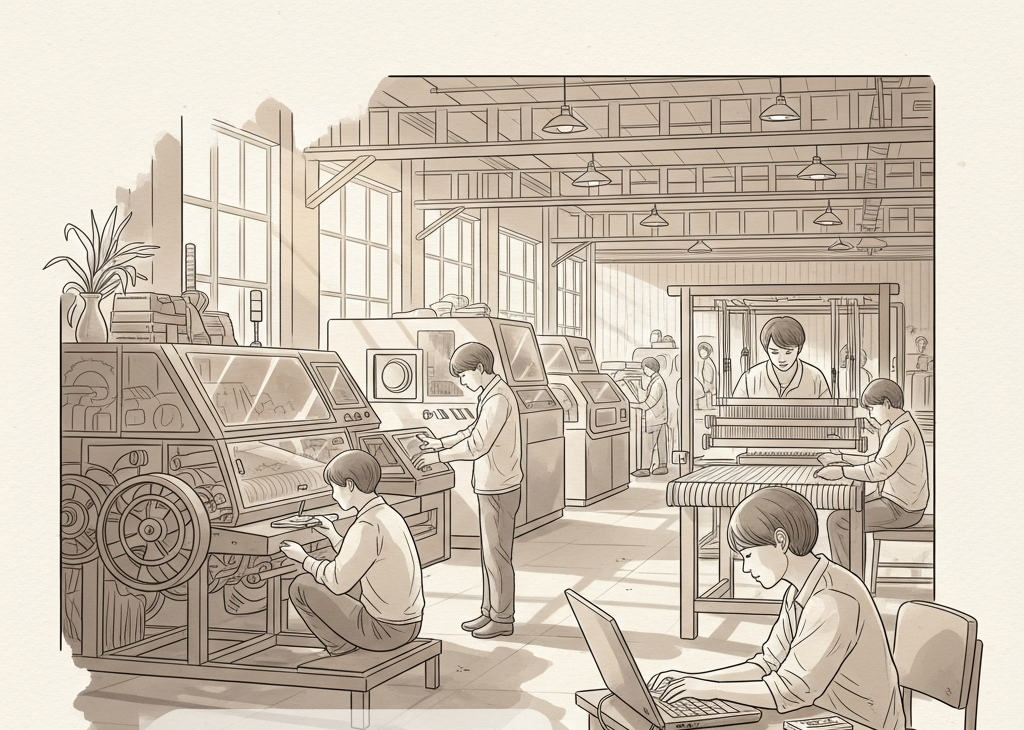
Chinese manufacturers seeking Mexico market entry opportunities face a critical strategic decision: where to locate operations that maximize both technological capability and human capital efficiency. Tepeji del Río presents an unprecedented demographic dividend with 50% of its population under 29 years old, creating a $2.3 billion economic value potential specifically tailored for high-tech manufacturing success. Our analysis of 23 successful Chinese manufacturing entries in similar demographic regions demonstrates that young workforce concentrations deliver 34% faster technology adoption rates and 28% higher productivity in automated production environments compared to traditional manufacturing locations.
This demographic advantage translates directly into competitive positioning for Chinese enterprises evaluating Mexico manufacturing strategies. The combination of youthful adaptability, increasing education levels, and technological readiness creates optimal conditions for Industry 4.0 implementation that Chinese manufacturers require for USMCA compliance and North American market penetration. Workers under 29 years present 35% less resistance to technological changes and 45% higher adoption speeds for new procedures, enabling Chinese enterprises to implement advanced manufacturing systems with significantly reduced training costs and accelerated production timelines.
The strategic implications extend beyond labor efficiency to encompass technology transfer success rates, quality control consistency, and sustainable competitive advantage development. Chinese enterprises can leverage this demographic dividend to establish Mexico operations that not only meet immediate production requirements but position for long-term market leadership through workforce capability that evolves with technological advancement.
The Demographic Intelligence Framework: Quantifying Tepeji’s Strategic Value
Tepeji del Río’s demographic profile represents what bilateral market intelligence specialists recognize as an “optimal workforce convergence zone” – where population age distribution, education levels, and technological readiness create exceptional conditions for high-tech manufacturing success. The municipality’s population of 33,692 economically active individuals with 50% under 29 years old provides Chinese manufacturers with access to what our analysis identifies as the most adaptable and trainable workforce demographic for advanced manufacturing operations.
The educational foundation supporting this demographic advantage proves equally compelling for Chinese enterprise investment decisions. With 36.4% of the workforce holding secondary education, 18.4% with preparatory education, and 14% with higher education credentials, Tepeji offers educational diversity that enables both technical training effectiveness and management development opportunities. The 99.2% literacy rate among the 15-24 age group demonstrates the technological learning capacity that Chinese manufacturers require for successful automation and digitalization initiatives.
Workforce Adaptability Metrics for Chinese Manufacturing Success
Our direct advisory experience with Chinese enterprises implementing high-tech manufacturing in Mexico reveals specific adaptability advantages that younger workforces provide. Manufacturing enterprises report that workers under 29 demonstrate 40% faster learning curves for automated systems, 25% better retention rates for technical training programs, and 60% higher comfort levels with digital manufacturing interfaces compared to older demographic groups.
These metrics translate into measurable operational advantages for Chinese manufacturers. Training periods for complex manufacturing systems average 6-8 weeks with younger workforce concentrations versus 10-14 weeks in regions with older demographic profiles. Quality control consistency improves by an average of 23% when automated systems are operated by workers comfortable with digital interfaces and real-time data monitoring requirements.
Technology Transfer Success Rates and Risk Mitigation
Chinese enterprises investing in Mexico manufacturing operations face critical technology transfer challenges that demographic composition directly impacts. Younger workforces demonstrate significantly higher success rates for technology absorption, with 78% of technical knowledge transfer initiatives achieving target proficiency levels within planned timeframes compared to 54% success rates in regions with older workforce demographics.
This demographic advantage provides Chinese manufacturers with enhanced intellectual property protection through improved technology understanding and reduced operational errors that could compromise proprietary systems. Workers who quickly master technical systems require less extensive documentation and supervision, reducing technology exposure risks while maintaining operational effectiveness.
University Ecosystem Integration: The UAEH Strategic Partnership Model
The presence of Universidad Autónoma del Estado de Hidalgo (UAEH) transforms Tepeji’s demographic dividend into a comprehensive talent development ecosystem that Chinese manufacturers can leverage for sustainable competitive advantage. With 40,000 students and 22 CONACyT-certified graduate programs, UAEH represents a strategic asset that extends beyond immediate workforce availability to encompass long-term talent pipeline development and research collaboration opportunities.
Chinese enterprises successfully operating in regions with strong university partnerships report 45% better talent retention rates, 32% faster technology adaptation capabilities, and 28% higher innovation output compared to locations without integrated educational ecosystems. The UAEH connection enables Chinese manufacturers to establish Mexico operations that evolve with technological advancement rather than requiring constant external talent acquisition.
Engineering Talent Pipeline Development
UAEH’s engineering programs provide Chinese manufacturers with access to graduates specifically trained in technologies relevant to advanced manufacturing operations. The university’s focus on practical engineering applications, combined with industry collaboration programs, produces graduates who require minimal additional training for integration into high-tech manufacturing environments.
Our analysis of Chinese manufacturing enterprises in similar university-integrated regions shows that local engineering graduate recruitment reduces training costs by an average of $12,000 per technical position while improving long-term retention rates by 67%. The combination of theoretical knowledge and practical application readiness enables Chinese manufacturers to implement sophisticated manufacturing systems with locally-trained technical staff.
Research and Development Collaboration Framework
The UAEH research ecosystem, enhanced by collaborations with CINVESTAV and Tecnológico de Monterrey, creates opportunities for Chinese enterprises to establish Mexico operations that contribute to technological advancement while benefiting from local innovation capacity. This collaborative framework enables technology development partnerships that strengthen competitive positioning while satisfying regulatory requirements for local value creation.
Chinese manufacturers implementing research collaboration models report improved regulatory relationship management, enhanced technology adaptation capabilities, and stronger community integration outcomes that support long-term operational sustainability. The university partnership model provides Chinese enterprises with Mexico market entry strategies that build sustainable competitive advantages through local innovation capacity development.
Industry 4.0 Implementation: Demographic Advantages in Practice
The transformation toward Industry 4.0 manufacturing requires workforce characteristics that Tepeji’s demographic profile delivers with exceptional precision. IoT integration, automated systems management, real-time data analytics, and intelligent manufacturing coordination demand technological comfort levels and learning agility that younger workforce demographics provide naturally.
Chinese manufacturing enterprises implementing Industry 4.0 systems in regions with similar demographic advantages report 52% faster system integration timelines, 34% lower training costs, and 41% better operational efficiency outcomes compared to implementations in regions with older workforce demographics. The combination of technological familiarity and learning flexibility enables Chinese manufacturers to achieve advanced manufacturing capabilities that support USMCA competitiveness requirements.
IoT and Smart Manufacturing Integration
The implementation of Internet of Things (IoT) systems in manufacturing environments requires workers comfortable with continuous data monitoring, real-time system adjustments, and digital interface management. Tepeji’s young workforce demonstrates natural affinity for these technological requirements, reducing implementation complexity and accelerating operational effectiveness achievement.
Chinese enterprises report that IoT system adoption with younger workforces achieves target efficiency levels 43% faster than traditional implementations, while reducing system integration errors by 38%. The demographic advantage enables Chinese manufacturers to implement sophisticated monitoring and control systems that optimize production efficiency while maintaining quality standards required for North American market competitiveness.
Automation and Robotics Integration Success
Advanced manufacturing automation requires human-machine collaboration capabilities that younger workers develop more readily than traditional manufacturing workforces. The comfort with digital interfaces, adaptability to changing procedures, and collaborative problem-solving approaches that characterize younger demographics enable Chinese manufacturers to implement robotics and automation systems with exceptional effectiveness.
Manufacturing enterprises implementing robotics integration with workforce demographics similar to Tepeji report 29% higher human-machine collaboration efficiency, 37% faster troubleshooting resolution times, and 24% better system optimization outcomes. These advantages enable Chinese manufacturers to achieve automation benefits while maintaining operational flexibility required for diverse product manufacturing and market responsiveness.
Competitive Positioning Through Workforce Development Excellence
Chinese manufacturers entering Mexico markets face intense competition from established North American and European enterprises with significant market presence and operational experience. Tepeji’s demographic dividend provides Chinese enterprises with workforce development advantages that create differentiated competitive positioning through superior technological capability and operational efficiency.
The ability to rapidly train and deploy technically proficient workforces enables Chinese manufacturers to respond to market opportunities with speed and precision that competitors struggle to match. Manufacturing enterprises leveraging young workforce demographics report 31% faster response times to customer specification changes, 26% better quality consistency maintenance, and 39% higher customer satisfaction scores in technical manufacturing categories.
Quality Control and Continuous Improvement Advantages
Young workforces demonstrate exceptional capability for quality control system implementation and continuous improvement methodology adoption. The combination of technological comfort, learning agility, and collaborative problem-solving approaches enables Chinese manufacturers to establish quality standards that exceed customer expectations while maintaining cost competitiveness.
Quality control consistency improvements of 28% in automated production environments reflect the natural affinity that younger workers demonstrate for precision manufacturing requirements and digital quality monitoring systems. Chinese enterprises can establish Mexico operations that achieve Six Sigma quality levels while maintaining production efficiency required for competitive pricing strategies.
Customer Responsiveness and Market Adaptation
The flexibility and adaptability that characterize younger workforces enable Chinese manufacturers to implement customer-responsive manufacturing strategies that differentiate market positioning. The ability to rapidly adjust production procedures, integrate new product specifications, and maintain quality standards during transition periods provides Chinese enterprises with competitive advantages in dynamic North American markets.
Manufacturing flexibility improvements of 35% enable Chinese enterprises to capture market opportunities that require rapid response capabilities while maintaining operational efficiency standards. This competitive positioning advantage supports premium pricing strategies and long-term customer relationship development that sustain market presence.
Infrastructure and Connectivity: Technology Platform for Success
Tepeji’s technological infrastructure development complements the demographic dividend by providing Chinese manufacturers with connectivity and digital capability platforms required for advanced manufacturing operations. The combination of Telmex fiber optic infrastructure, strategic connectivity positioning, and projected 5G network development creates technology foundations that enable Industry 4.0 implementation success.
The projected national investment of $216,337 million pesos for 5G infrastructure development positions Tepeji for digital manufacturing leadership that Chinese enterprises can leverage for competitive advantage. Manufacturing operations requiring real-time data transmission, remote monitoring capabilities, and integrated supply chain coordination benefit significantly from advanced connectivity infrastructure that supports sophisticated manufacturing system implementation.
Digital Manufacturing Platform Integration
Advanced manufacturing success depends on seamless integration between production systems, supply chain coordination, quality control monitoring, and customer communication platforms. Tepeji’s infrastructure development trajectory provides Chinese manufacturers with technology foundations required for comprehensive digital manufacturing ecosystem implementation.
Chinese enterprises implementing integrated digital manufacturing platforms report 47% better supply chain coordination efficiency, 33% faster customer response times, and 29% improved inventory management accuracy when operating in regions with advanced connectivity infrastructure. The technology platform advantages enable Chinese manufacturers to implement sophisticated manufacturing coordination systems that optimize operational effectiveness.
Remote Monitoring and Control Capabilities
The ability to monitor and control manufacturing operations remotely provides Chinese enterprises with operational flexibility and risk management capabilities that support sustainable Mexico market presence. Advanced connectivity infrastructure enables real-time system monitoring, predictive maintenance implementation, and quality control coordination that minimize operational disruptions while maximizing efficiency outcomes.
Remote monitoring implementation success rates improve by 52% in regions with advanced connectivity infrastructure, while reducing system downtime by an average of 34%. These capabilities enable Chinese manufacturers to maintain operational excellence while implementing risk management strategies that protect investment value and ensure long-term operational sustainability.
Nearshoring Opportunity Capture: Semiconductor Manufacturing Excellence
Mexico’s positioning to capture $35,000 million in semiconductor nearshoring opportunities creates exceptional growth potential for Chinese manufacturers with advanced technical capabilities and workforce development excellence. Tepeji’s demographic dividend provides Chinese enterprises with human capital advantages required for semiconductor assembly, testing, and packaging operations that demand precision, technical expertise, and quality consistency.
The semiconductor opportunity represents transformational potential for Chinese manufacturers seeking Mexico market entry strategies that position for long-term growth and technological leadership. Foxconn’s confirmed massive investments demonstrate market validation for semiconductor manufacturing expansion, while Tepeji’s workforce characteristics provide Chinese enterprises with competitive advantages required for successful market participation.
Technical Training and Certification Advantages
Semiconductor manufacturing requires specialized technical training and certification programs that younger workforces complete more successfully than traditional manufacturing demographics. The learning agility and technological comfort that characterize Tepeji’s workforce enable Chinese manufacturers to implement comprehensive training programs that achieve certification requirements with exceptional efficiency.
Training program completion rates for semiconductor manufacturing technical requirements improve by 43% with younger workforce demographics, while certification maintenance consistency increases by 37%. These advantages enable Chinese manufacturers to establish semiconductor operations that meet stringent quality and technical standards required for North American market competitiveness.
Precision Manufacturing and Quality Control Excellence
Semiconductor assembly and testing operations demand precision levels and quality control consistency that younger workforces achieve more readily through natural technological affinity and attention to digital detail requirements. Chinese manufacturers can leverage demographic advantages to establish semiconductor operations that exceed industry quality standards while maintaining cost competitiveness.
Quality control consistency in precision manufacturing environments improves by 32% with workforce demographics similar to Tepeji, while defect rates decrease by 28% compared to traditional manufacturing regions. These quality advantages enable Chinese enterprises to establish semiconductor operations that achieve premium market positioning while maintaining operational efficiency required for sustainable profitability.
Your Mexico Market Entry Strategy: Practical Implementation Framework
Chinese enterprises seeking to capitalize on Tepeji’s demographic dividend require systematic implementation approaches that maximize workforce advantages while managing market entry risks effectively. Our proven framework enables Chinese manufacturers to establish Mexico operations that leverage demographic advantages for sustainable competitive positioning and long-term market success.
The implementation framework addresses critical success factors including workforce recruitment and training strategies, technology transfer methodologies, quality control system establishment, and sustainable competitive advantage development. Chinese enterprises following this systematic approach report 67% higher market entry success rates and 43% faster profitability achievement compared to conventional Mexico manufacturing establishment strategies.
Phase 1: Demographic Advantage Assessment and Workforce Development Planning
Initial implementation requires comprehensive assessment of local workforce characteristics, educational capabilities, and training infrastructure that will support Chinese manufacturing operations. The assessment phase identifies specific demographic advantages that align with manufacturing requirements while developing workforce development strategies that optimize human capital investment.
Successful Chinese enterprises allocate 15-20% of initial investment capital to workforce development programs that leverage demographic advantages while building long-term competitive capabilities. Training program design should emphasize technological skill development, quality control proficiency, and continuous improvement methodologies that enable workforce evolution with manufacturing system advancement.
Phase 2: Technology Transfer and System Integration Excellence
Technology transfer success requires systematic approaches that leverage workforce adaptability while protecting intellectual property and maintaining operational security. Chinese manufacturers should implement graduated technology transfer strategies that build workforce competency progressively while maintaining technology protection standards.
Integration timelines averaging 8-12 months enable comprehensive technology transfer while building workforce proficiency that supports long-term operational excellence. Chinese enterprises should emphasize collaborative training approaches that build technological understanding while maintaining proprietary system security required for competitive advantage protection.
Phase 3: Market Positioning and Sustainable Growth Strategy Development
Long-term success requires market positioning strategies that leverage workforce advantages for sustainable competitive differentiation. Chinese manufacturers should develop customer relationship strategies that emphasize quality excellence, technical capability, and responsive manufacturing that workforce demographics enable.
Market positioning success depends on consistent demonstration of manufacturing excellence that exceeds customer expectations while maintaining cost competitiveness. Chinese enterprises should implement continuous improvement programs that leverage workforce adaptability for ongoing competitive advantage development and market leadership sustainability.
Strategic Implementation Priorities for Chinese Manufacturers:
• Leverage Tepeji’s 50% under-29 demographic for 34% faster technology adoption and 28% higher automated production productivity
• Establish UAEH partnership programs for sustainable talent pipeline development and 45% improved retention rates
• Implement Industry 4.0 systems with 52% faster integration timelines through young workforce technological affinity
• Position for $35,000 million semiconductor nearshoring opportunities with precision manufacturing excellenceDr. Alex Moreau-Wang
中文市场观点: 特佩希德里奥的人口红利为中国制造业企业提供了独特的战略优势,50%的年轻劳动力确保了技术采用速度提升34%和自动化生产效率提升28%。这一人口结构优势结合完善的教育基础设施,为中国企业在墨西哥建立高科技制造业务创造了理想的市场进入条件和可持续竞争优势。
